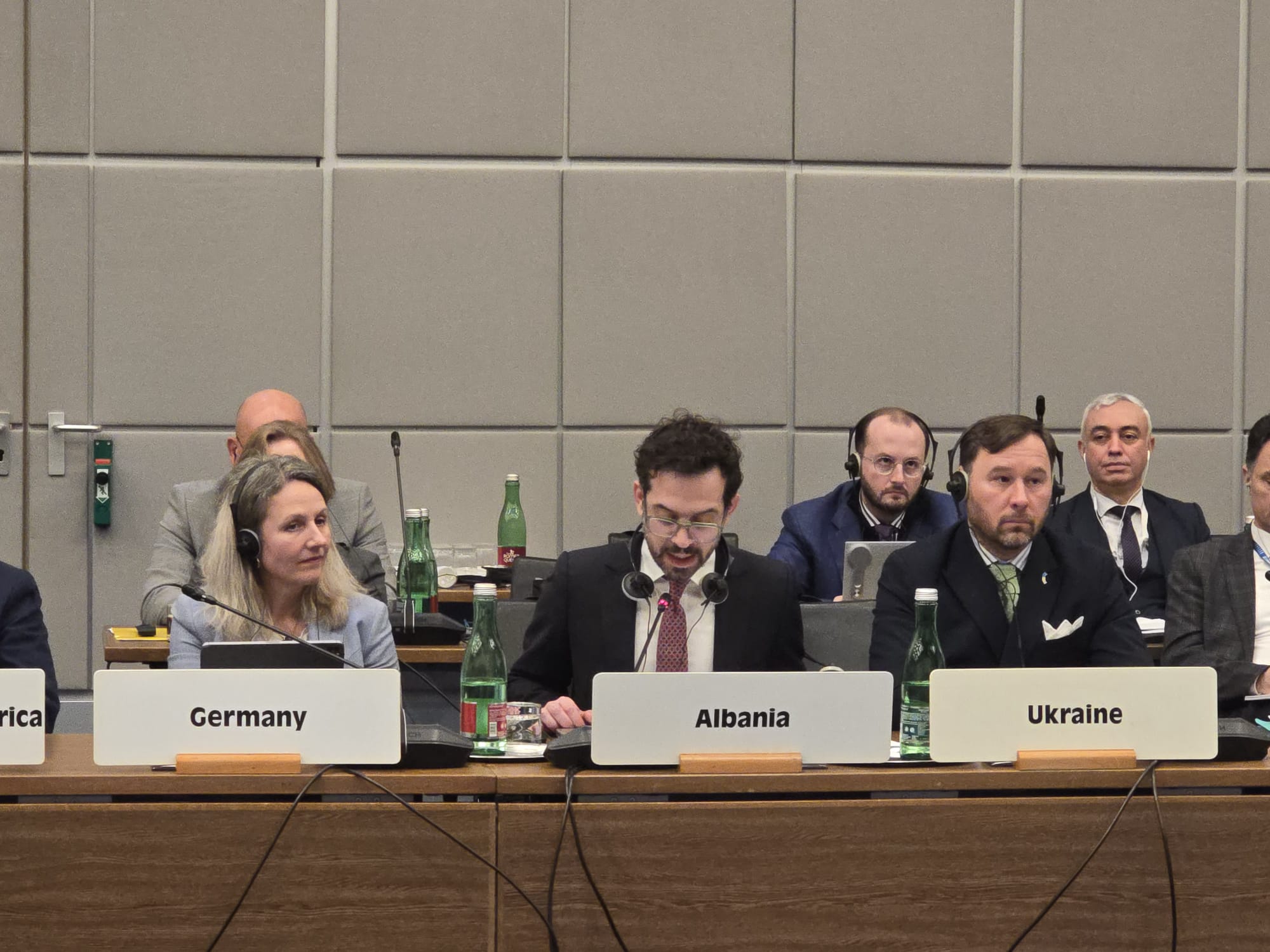



Statement by Mr. Andris Stastoli, Counsellor, at FSC Security Dialogue
30th Anniversary of the Subregional Arms Control Agreement (Article IV, Annex 1-B of the Dayton Peace Agreement)
Madam Chair,
- Albania thanks the FSC Chairpersonship of France for convening this Security Dialogue to mark the thirtieth anniversary of the Subregional Arms Control Agreement under Article IV of Annex 1-B of the Dayton Peace Agreement. We also extend our appreciation to the distinguished panellists for their valuable insights and reflections.
- Thirty years ago, in the fragile aftermath of war, the parties recognised that sustainable peace in Bosnia and Herzegovina and the wider region required more than a political settlement. It required practical security arrangements capable of reducing mistrust and preventing renewed confrontation.
- The Subregional Arms Control Agreement answered this need with a clear and pragmatic framework. Through limitations on major categories of conventional weapons, regular exchanges of military information, and a robust system of inspections and verification, it introduced transparency where suspicion had prevailed. By establishing balanced defence force levels and preventing destabilising accumulations of armaments, it contributed significantly to stabilising the region in the crucial post-conflict years.
- Three decades later, the continued implementation of this legally binding instrument stands out as a remarkable achievement. At a time when many arms control arrangements across the wider European security architecture face serious challenges, the durability of this Agreement demonstrates the enduring value of transparency, predictability, and cooperative security.
- The continued relevance of this Agreement also reminds us that stability in the Western Balkans depends not only on the commitments of the parties themselves, but also on the responsible conduct of all those who support and influence political actors in the region.
- Importantly, the Agreement has also played a broader stabilising role. By fostering regular contact, dialogue, and confidence-building among the parties, it has helped sustain a political environment more conducive to peace and cooperation in the Western Balkans.
- For Albania, the experience of Article IV carries an important lesson: arms control is not merely a technical exercise. It is an essential pillar of peacebuilding.
- The stabilisation of military balances following the conflicts of the 1990s helped ensure that the tragedies of that decade, including crimes recognised by international courts such as the Srebrenica genocide, would never be repeated. Preserving this stability therefore requires not only continued implementation of arms control commitments, but also responsible political leadership and a shared commitment to truth and reconciliation.
- In this regard, Albania reiterates its consistent support for the sovereignty, territorial integrity, and constitutional order of Bosnia and Herzegovina. Respect for the commitments undertaken under the Dayton framework remains essential for preserving the stability that arms control arrangements were designed to support. Narratives that deny genocide, glorify war criminals, or undermine the institutions of the state risk eroding the foundations of reconciliation and long-term peace.
- As we mark this anniversary, the Subregional Arms Control Agreement reminds us that even in the most fragile post-conflict environments, practical arms control measures can help transform mistrust into transparency and confrontation into cooperation.
- Albania will continue to support dialogue, regional cooperation, and confidence-building measures that strengthen stability in the Western Balkans and reinforce the objectives of the Dayton framework.
Thank you.