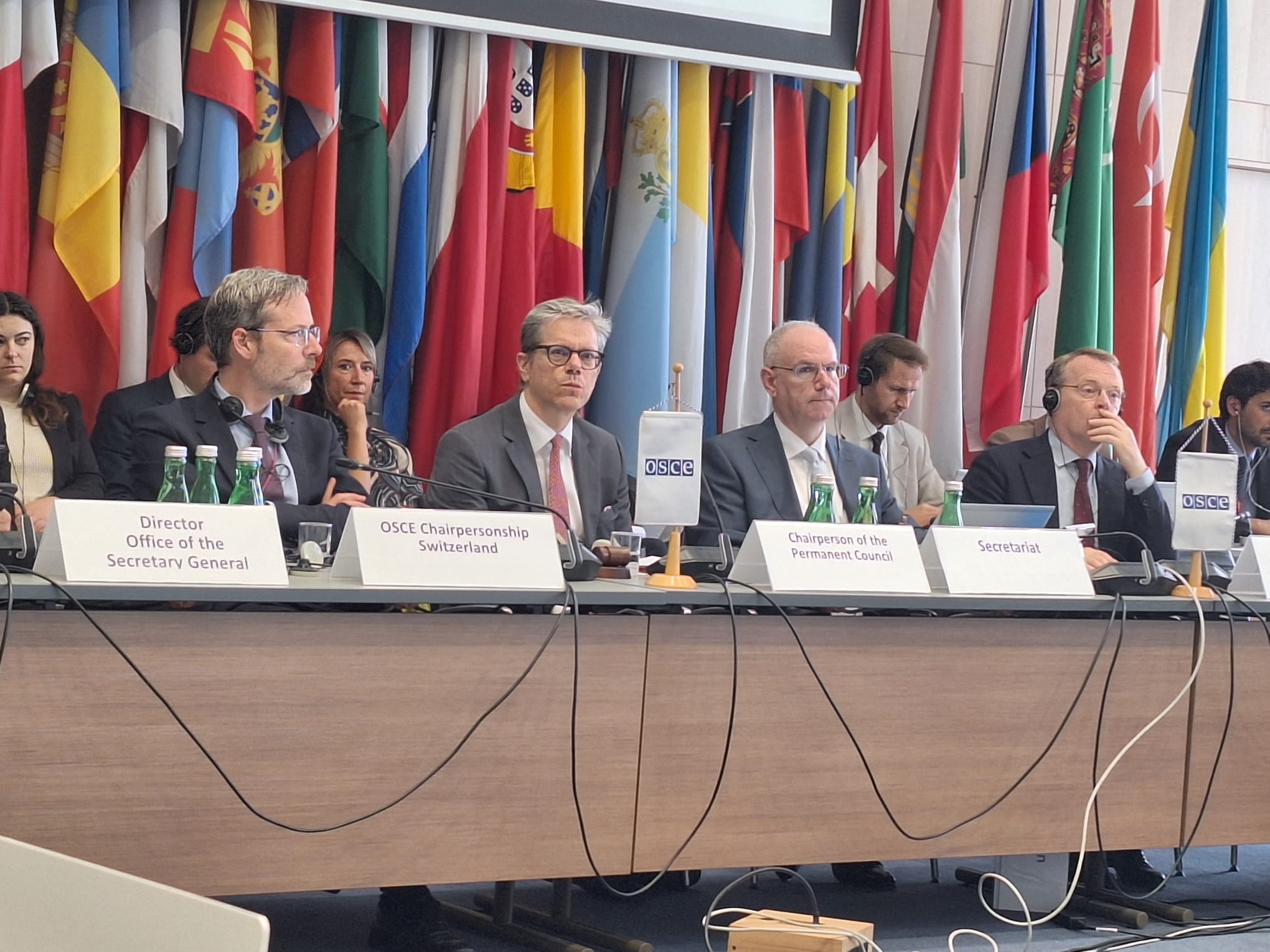



Statement by H.E. Eglantina Gjermeni, Ambassador, Permanent Representative
in response to the Report by the OSCE High Commissioner on National Minorities
Meeting 1567 of the Permanent Council, 4 June 2026, Vienna
Thank you, Mr. Chairperson,
Dear colleagues,
Dear Christophe,
Albania warmly welcomes High Commissioner Christophe Kamp and thanks him for presenting the report. We commend his leadership and the valuable work of the HCNM in advancing dialogue, strengthening trust among communities and contributing to conflict prevention across the OSCE area.
We particularly appreciate the High Commissioner’s dedicated work, sustained engagement and regular visits on the ground, which contribute to a better understanding of the challenges faced by national minorities and help foster dialogue, trust and practical solutions. The institution’s emphasis on dialogue, evidence-based policymaking and responsible approaches to sensitive issues remains highly relevant in the current environment.
High Commissioner,
We appreciate your engagement on issues affecting the Albanian minority in southern Serbia. Your recent visit to the region and efforts to engage with both the authorities and local stakeholders contribute to addressing longstanding concerns through dialogue and practical solutions.
A central concern remains the practice known as passivisation of addresses, whereby residents are removed from official residence records. This issue has been explicitly addressed in the concluding observations of the UN Committee on the Elimination of Racial Discrimination (CERD) on Serbia (CERD/C/SRB/CO/6-9, 2026), which expressed concern about the discriminatory application of the Law on Residence and Residence of Citizens leading to the suspension of permanent addresses of members of ethnic minorities, particularly Albanians in the south of Serbia, their removal from population registers, and the resulting restrictions on their civil and political rights, including access to identity documents. The Committee recommended that Serbia investigate these practices and ensure that affected individuals are duly notified in writing in order to access effective remedies.
We also note that the Committee of Ministers of the Council of Europe, in its Resolution CM/ResCMN(2025)7 “On the implementation of the Framework Convention for the Protection on National Minorities by Serbia”, called on Serbia to engage in dialogue with representatives of the Albanian minority and address concerns related to the practice of passivisation of addresses, including the methods used by law-enforcement authorities in Bujanoc, Medvegjë and Preshevë.
Beyond the issue of passivisation of addresses, concerns persist regarding the effective inclusion of the Albanian minority in public life. Albanians remain significantly underrepresented in key state institutions, including the police, judiciary, prosecution services and public administration, despite commitments to ensuring equitable representation. We are particularly concerned by the continued lack of progress in ensuring adequate representation in law-enforcement institutions. We continue to follow closely the unresolved issues related to the recognition of diplomas and professional qualifications, including those covered by agreements concluded within the framework of the Berlin Process. Addressing these issues is essential for ensuring equal opportunities, strengthening trust in public institutions and promoting the effective participation of the Albanian minority in society.
We encourage you, High Commissioner to continue your engagement with the Serbian authorities and representatives of the Albanian minority in southern Serbia in support of dialogue, tangible progress in resolving longstanding concerns, and the implementations of commitments related to the rights and participation of national minorities.
Mr. Chair,
The challenges affecting national minorities, including those faced by the Albanian minority in southern Serbia, underscore the continued relevance of the HCNM’s mandate and the importance of the OSCE human dimension.
As Chair of the Human Dimension Committee, Albania attaches particular importance to the promotion and protection of human rights, fundamental freedoms, tolerance and non-discrimination. In this regard, we highly value the close co-operation between the Human Dimension Committee and the HCNM, as well as the institution’s vital contribution to strengthening the human dimension of the OSCE’s comprehensive concept of security.
The HCNM’s ongoing thematic work continues to make an important contribution to the protection of national minorities across the OSCE area. We look forward to the publication of the Siena Recommendations on Contested Histories and National Minorities and trust that they will provide a useful resource for participating States in promoting dialogue, mutual understanding and inclusive approaches to issues affecting national minorities.
Allow me to conclude by once again thanking High Commissioner Christophe Kamp and his team for their continued efforts. Albania reaffirms its full support for the mandate and work of the High Commissioner on National Minorities and remains committed to strengthening co-operation in pursuit of inclusive, resilient and cohesive societies across the OSCE area.
Thank you.