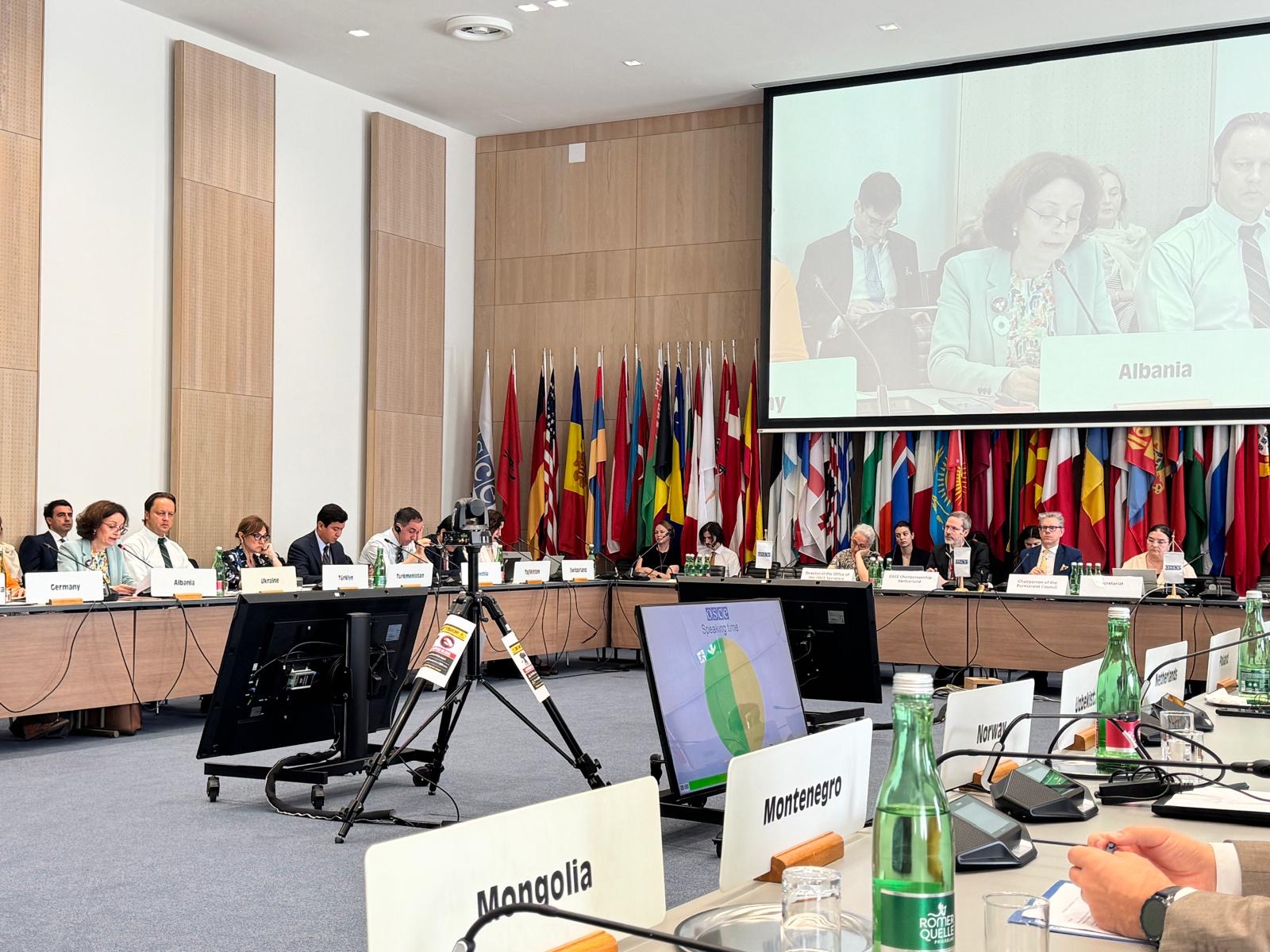



Statement by H.E. Eglantina Gjermeni, Ambassador, Permanent Representative of Albania
1573th Permanent Council, Current Issues “On the 31st Anniversary of the Srebrenica Genocide” 16 July 2025, Vienna
Thank you, Mr. Chair,
Today, we honor the memory of the victims of the genocide in Srebrenica, one of the gravest crimes committed in Europe since the Second World War.
We pay tribute to those who lost their lives, to the families who continue to live with their loss, and to the survivors whose resilience has kept the memory of Srebrenica alive.
More than 8,000 Bosniak men and boys were systematically murdered in July 1995, while thousands of women, children, and elderly people were forcibly displaced. International courts have unequivocally established that these crimes constituted genocide.
Srebrenica was not the result of spontaneous violence. It was the outcome of a deliberate policy of ethnic cleansing, driven by hatred, extreme nationalism, and the dehumanization of an entire community. It remains one of Europe’s darkest chapters and a reminder of the devastating consequences of hatred, intolerance, and extreme nationalism.
It is precisely because these lessons must never be forgotten that the United Nations General Assembly proclaimed 11 July as the International Day of Reflection and Commemoration of the 1995 Genocide in Srebrenica. As a member of the Core Group that initiated the resolution, Albania helped build broad international support for its adoption, reaffirming its commitment to preserving historical truth, rejecting genocide denial, and upholding international justice.
Colleagues,
Remembering Srebrenica is not only about honoring the victims. It is also about understanding why this genocide happened and ensuring that its warning is never ignored. The victims were targeted because hatred was transformed into policy, and because discrimination and exclusion were allowed to become systematic violence.
The lessons of Srebrenica are not confined to history. They remind us that rhetoric which normalizes hatred and ethnic cleansing must never be ignored or dismissed. Unfortunately, recent public statements demonstrate that such rhetoric has not disappeared. We deeply regret that, even today, senior government officials continue to publicly use language that invokes and advocates ethnic cleansing. The recent statement by a member of the Serbian government, who publicly expressed regret that more extensive ethnic cleansing was not carried out in Kosova, is a stark example. It is unacceptable, shocking, and a grave insult to the victims of the war.
Such rhetoric has consequences. The words of those who hold public office carry particular weight. They shape public attitudes, influence what societies come to accept, and can embolden division, hatred, and intolerance.
Violence rarely begins with weapons. It begins with words—when hatred is tolerated, when people are stripped of their dignity and humanity, and when those who incite division are left unchallenged.
The most meaningful way to honor the victims of Srebrenica is not only to remember them, but to defend the values they were denied: human dignity, equality, justice, and peace. This is a responsibility we all share.
Thank you.