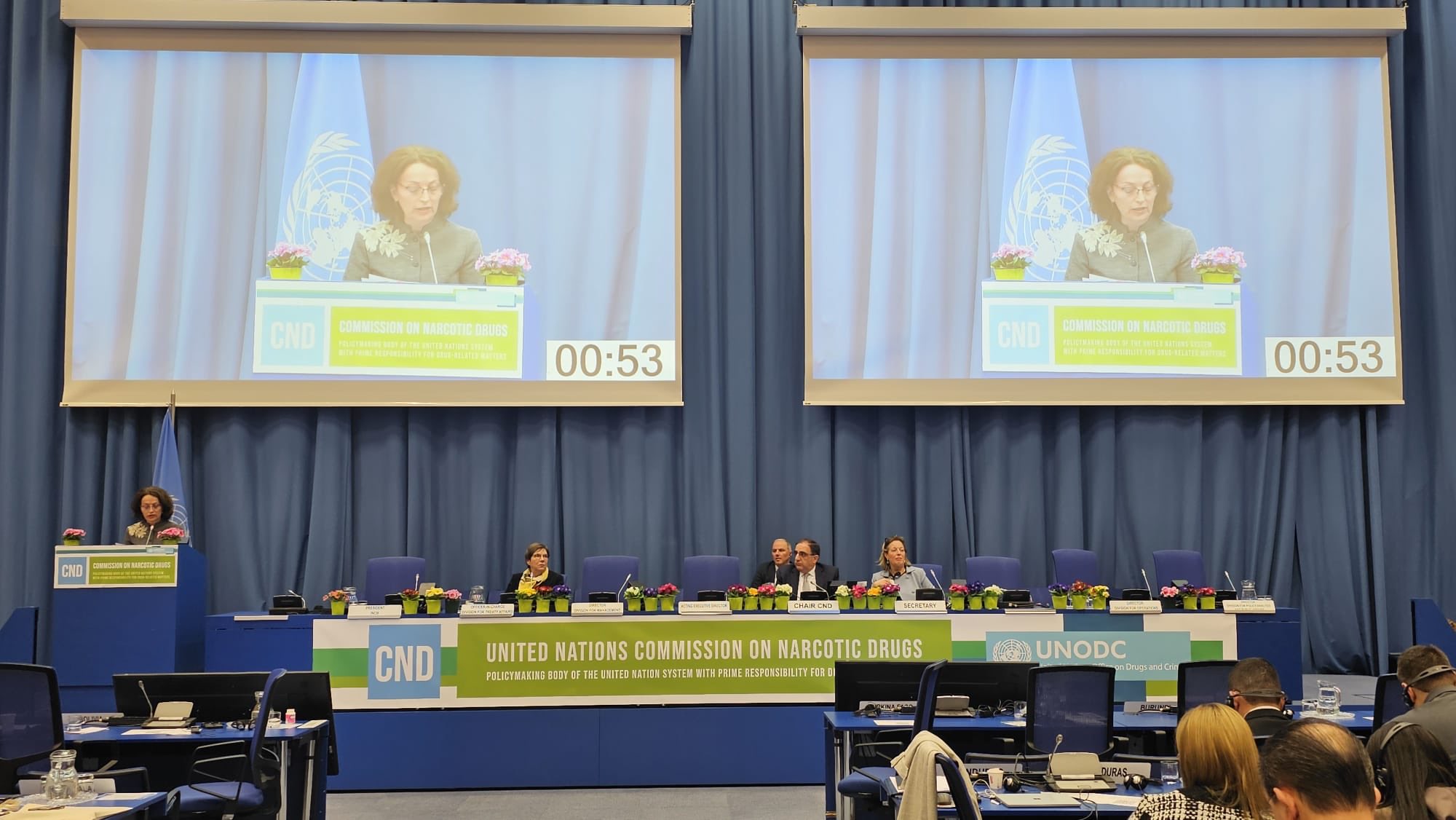



Statement by H.E. Ms. Eglantina Gjermeni, Ambassador, Permanent Representative
at the 69th Session of the Commission on Narcotic Drugs (9-13 March 2026)
Item 3: General Debate
Chair,
Excellencies,
Distinguished Delegates,
The global drug landscape is changing at remarkable speed. Synthetic drugs, new psychoactive substances, and increasingly sophisticated trafficking networks are reshaping the world drug problem and testing the resilience of our institutions.
No country is immune. No country can respond alone.
For Albania, this reality reinforces the importance of policies that are balanced, evidence-based, and rooted in strong international cooperation. We remain fully committed to the international drug control conventions and to advancing comprehensive responses that address both public health and security dimensions.
Over the past year, Albania has taken important steps to strengthen its national capacities to detect, monitor, and respond to emerging drug threats.
In 2025, the National Early Warning System Unit for Synthetic Drugs and New Psychoactive Substances became fully operational within the State Police. Its mission is clear: to rapidly identify new substances, assess their risks, and enable timely action to protect public health and safety.
Already, the system is delivering tangible results. During its first year of operation, the unit issued 43 alerts on new psychoactive substances through cooperation with the European Union Drugs Agency network and identified two new substances within our territory, including one that was subsequently reported across the European monitoring system.
At the same time, Albania has established the National Drug Observatory, which now operates within the Ministry of Health and Social Welfare as the national reference point for drug related data and analysis.
The establishment of the Observatory represents an important step in fulfilling Albania’s commitments under the Pledge4Action Initiative, reflecting our determination to strengthen evidence-based drug policies and institutional capacities.
The Observatory brings together information from health institutions, law enforcement authorities, and other national partners. By strengthening our ability to collect and analyse reliable data, it supports more informed policies and contributes to reporting obligations to both the European Union Drugs Agency and the United Nations Office on Drugs and Crime.
Mr. Chair,
Institutional strengthening must go hand in hand with legislative and strategic reforms.
Earlier this year, Albania’s Parliament adopted amendments to national legislation on narcotic drugs, psychotropic substances, and precursors, further aligning our legal framework with the European Union acquis and international standards.
In parallel, an inter-institutional working group has begun drafting Albania’s National Drug Strategy 2026–2030, which will promote a comprehensive and balanced approach across prevention, treatment, harm reduction, and law enforcement.
These efforts reflect a broader conviction: effective drug policy must be informed by science, supported by reliable data, and implemented through strong institutions.
Excellencies,
In an interconnected world, cooperation is not optional. It is indispensable.
Albania will continue to work closely with international organizations, regional partners, and civil society to strengthen collective responses to the evolving drug problem.
We remain committed to contributing constructively to the work of the Commission on Narcotic Drugs and to advancing policies that protect our societies, safeguard public health, and uphold the shared responsibility we carry in addressing the world drug problem.
Thank you.